OVERVIEW

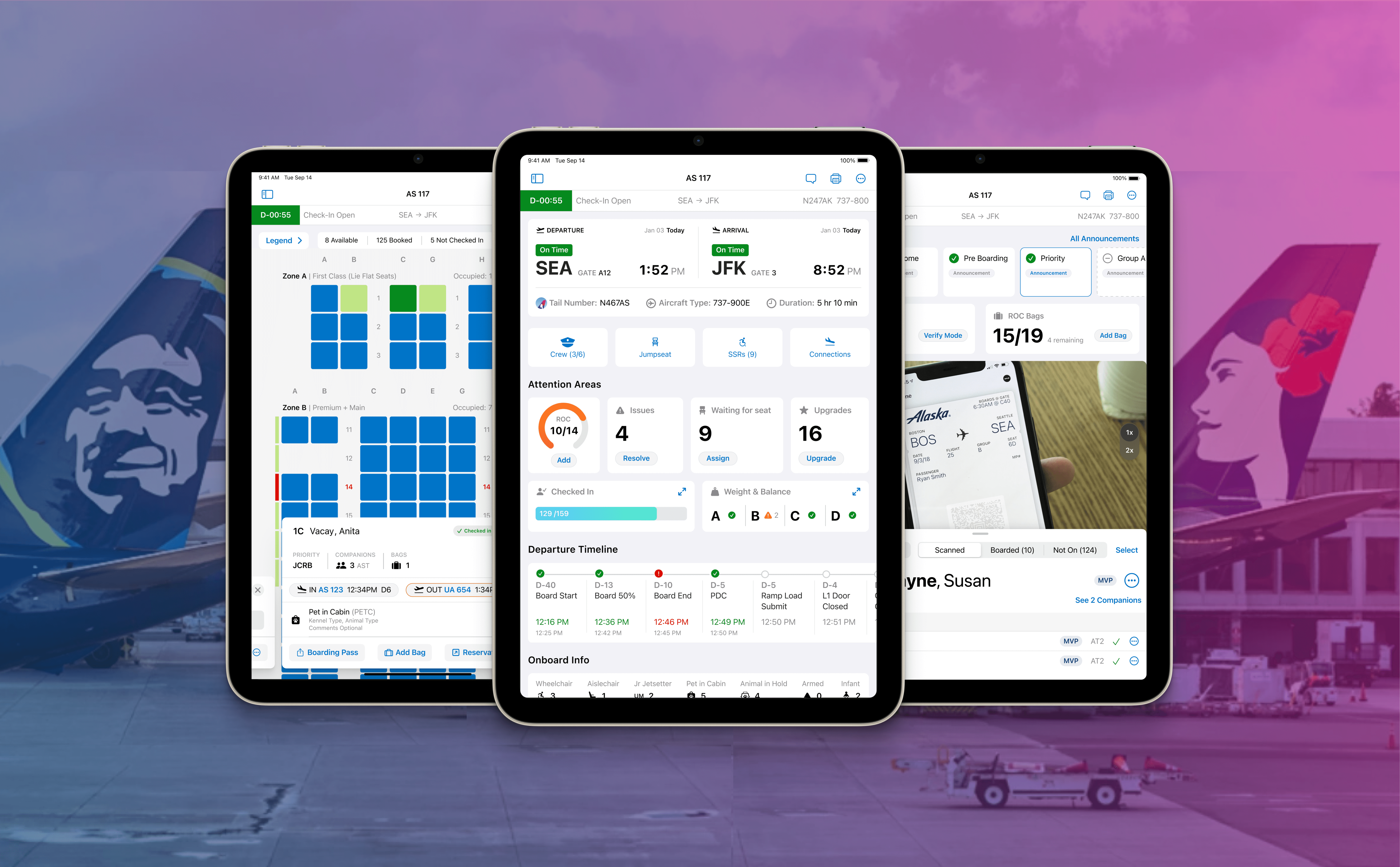
This redesign of Alaska Airlines' gate agent app was a strategic initiative driven by years of accumulating agent pain points and evolving business needs.
Over time, gate agent tools became increasingly fragmented, leading to inefficiencies, delays, longer training times, and reduced capacity for agents to focus on guest care.
When Alaska Airlines acquired Hawaiian Airlines, there was a clear business need to rethink the gate agent experience. This redesign unified these needs into a single, scalable platform designed to support both today’s operations and tomorrow’s growth.
USER CHALLENGES
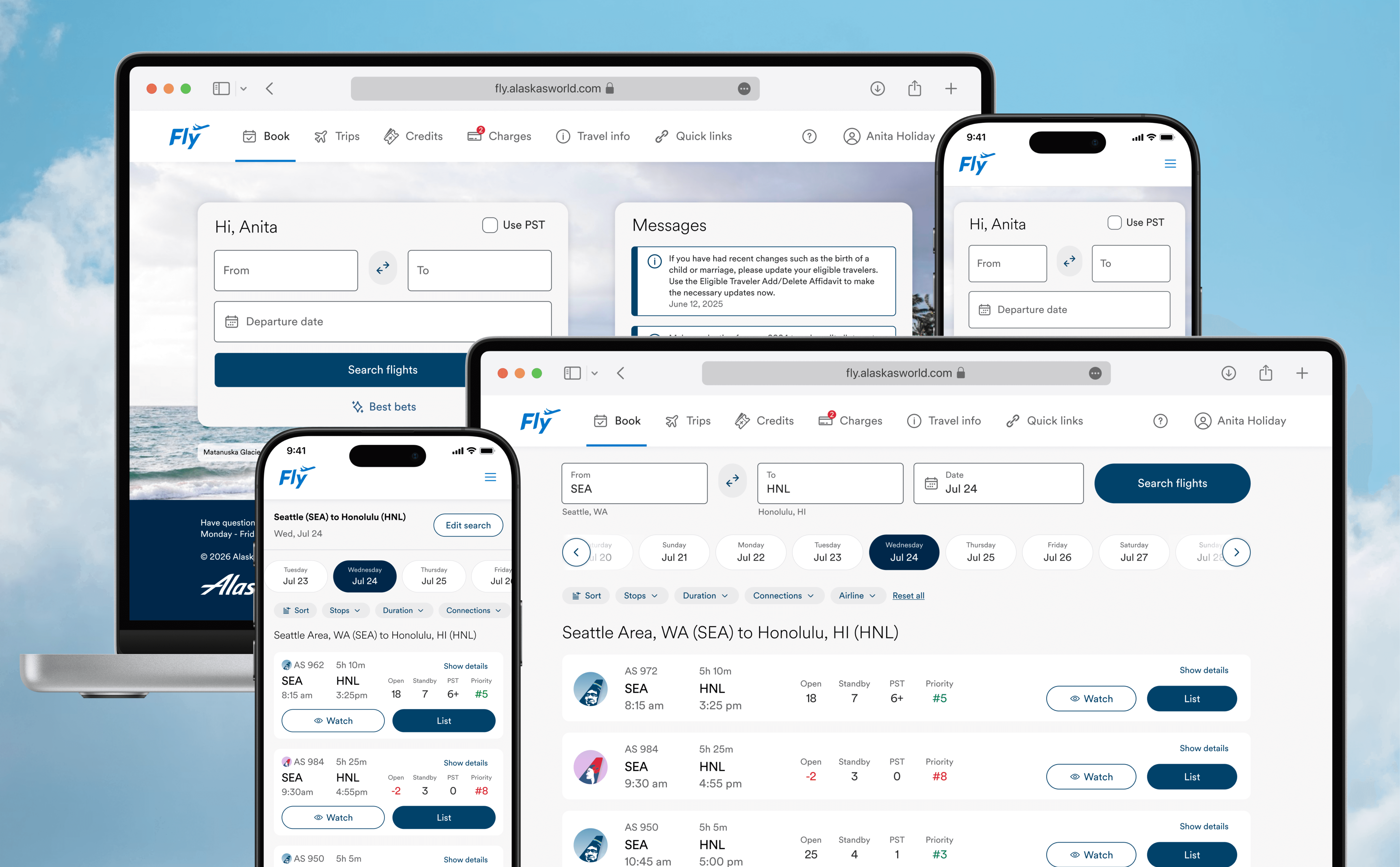
Too many different tools
Between four iPad apps, IMAGE, external websites, and paper reports, agents have difficulty remembering where to find the information and functionality they need to assist guests.
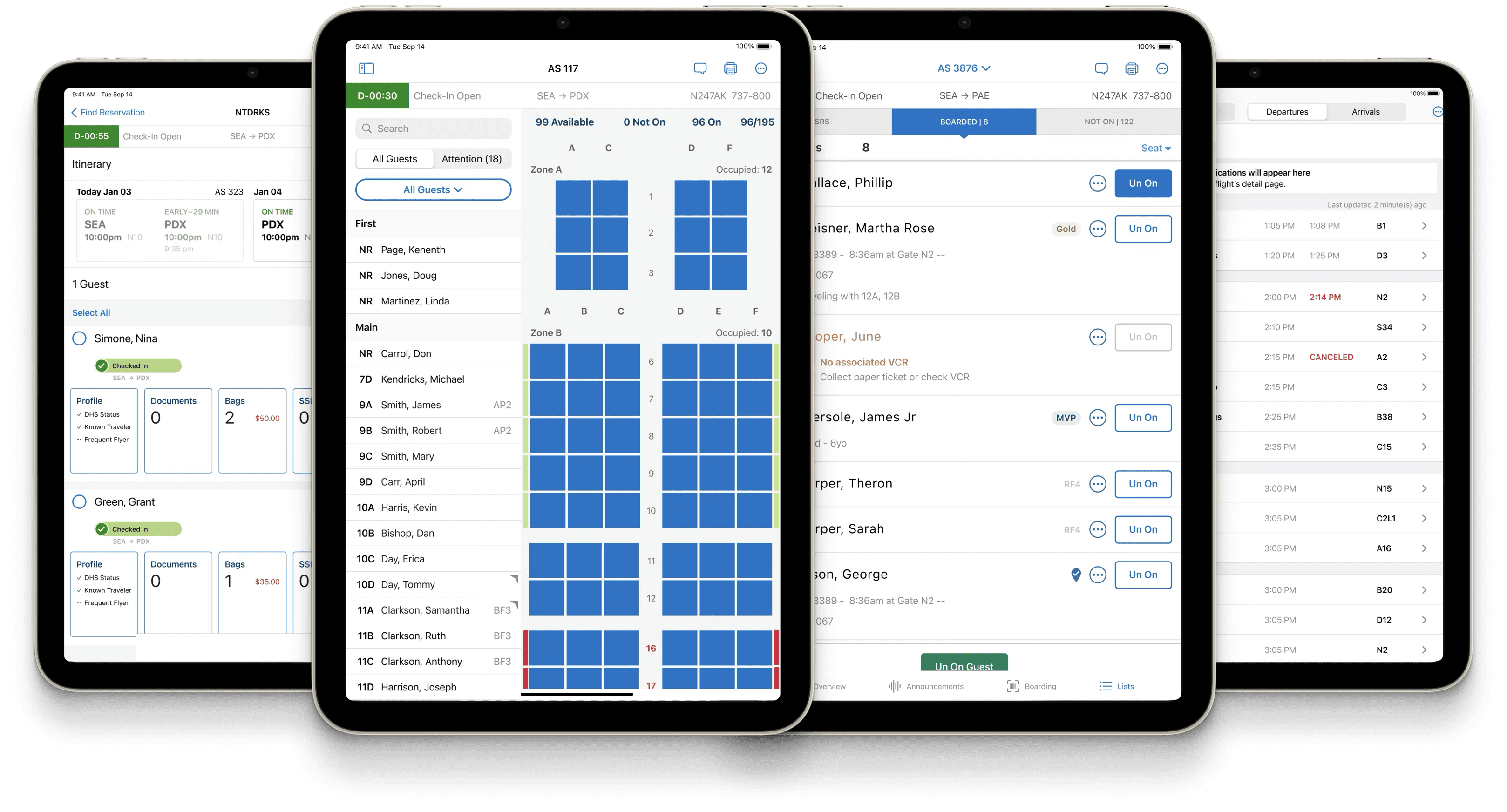
CSA Mobile
(iPad mobile app suite)
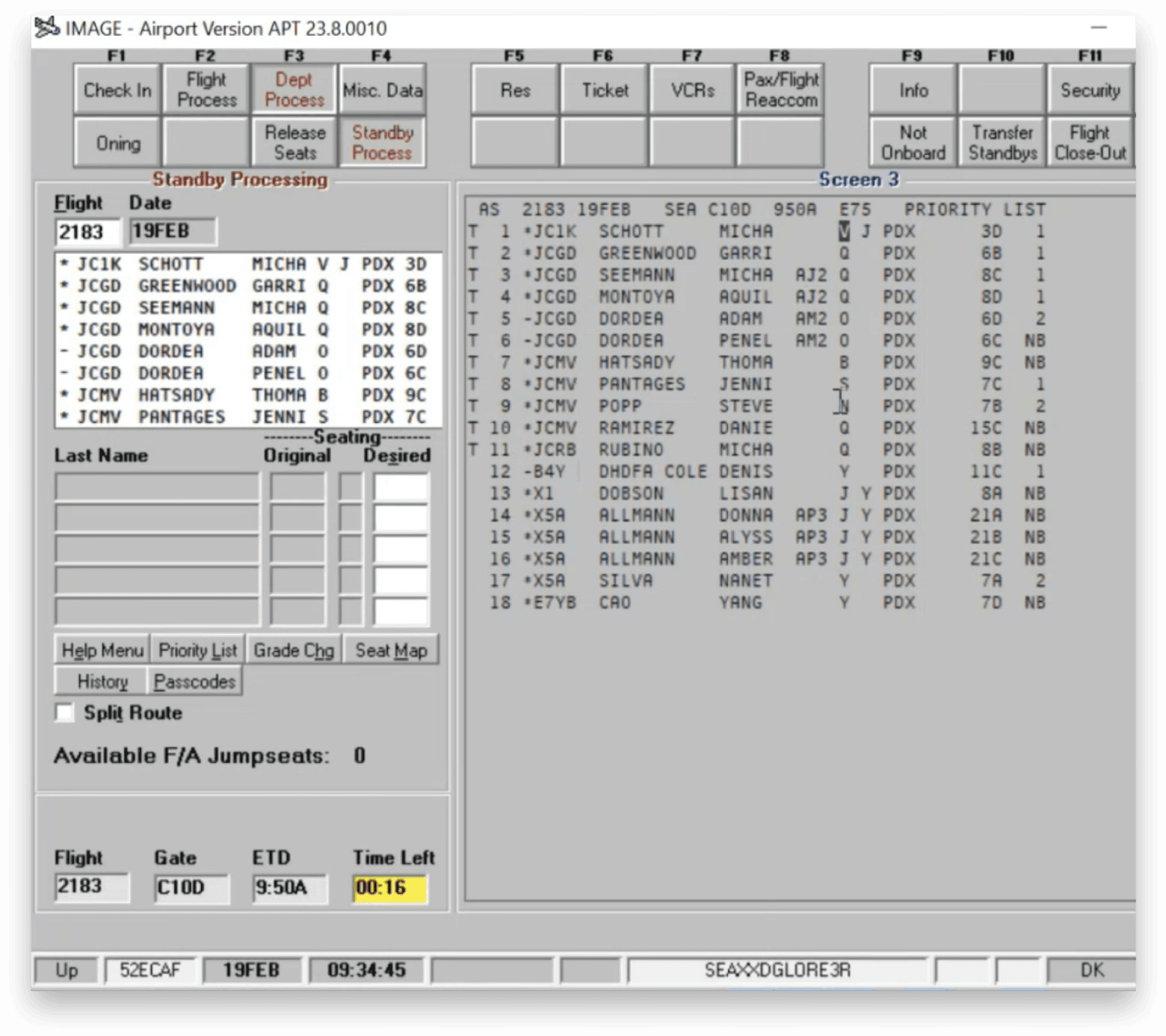
IMAGE
(20+ year old legacy desktop tool)
Lack of support for different station needs
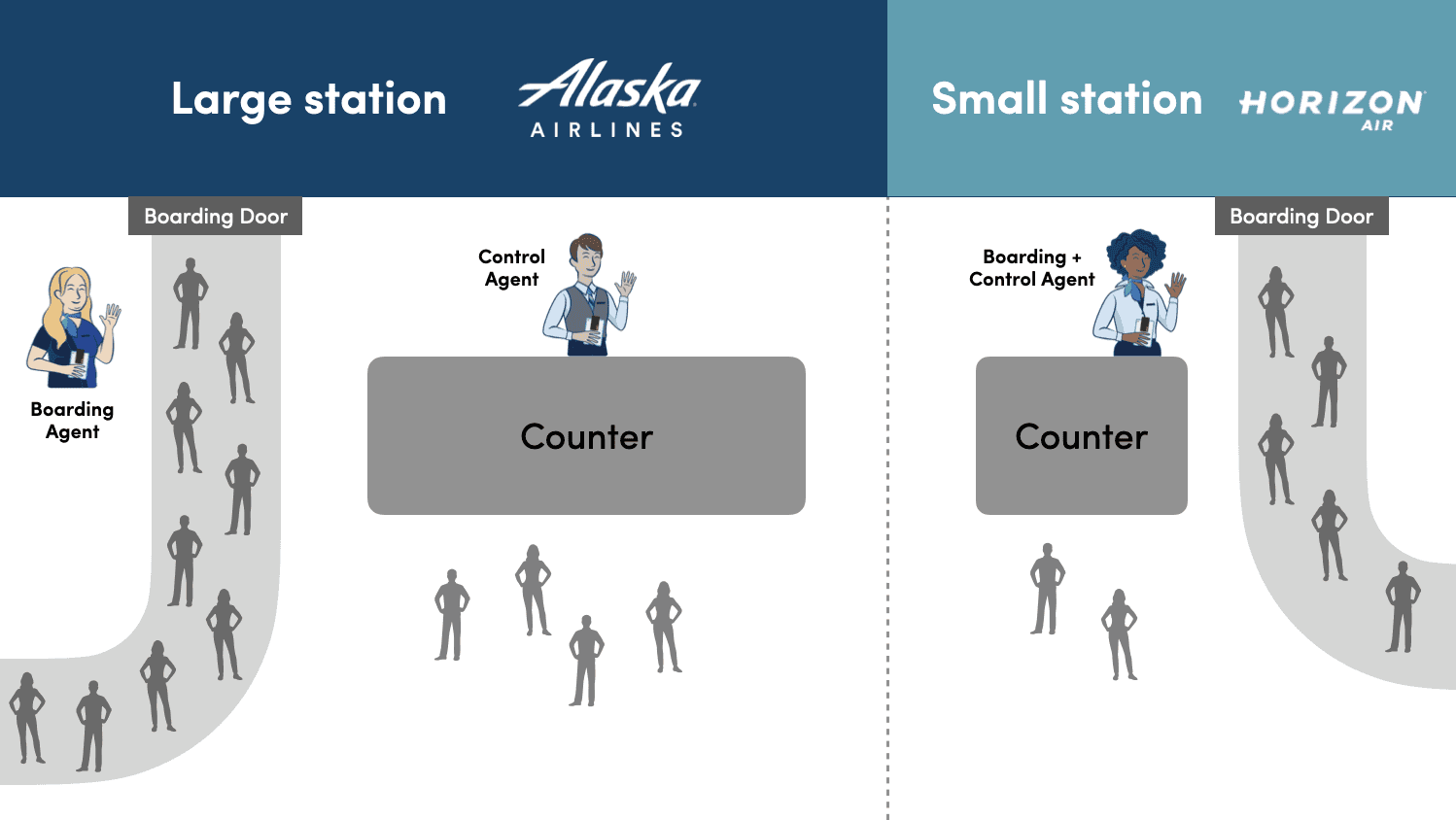
Large hub stations (>250 daily departures) are staffed with 2 agents per flight – a Control Agent and Boarding Agent, who each use a different iPad application. Meanwhile, small regional stations (<10 daily departures) have just 1 gate agent per flight. Yet, they must still use 2 separate applications, which is very inefficient for their workflow.
BUSINESS GOALS
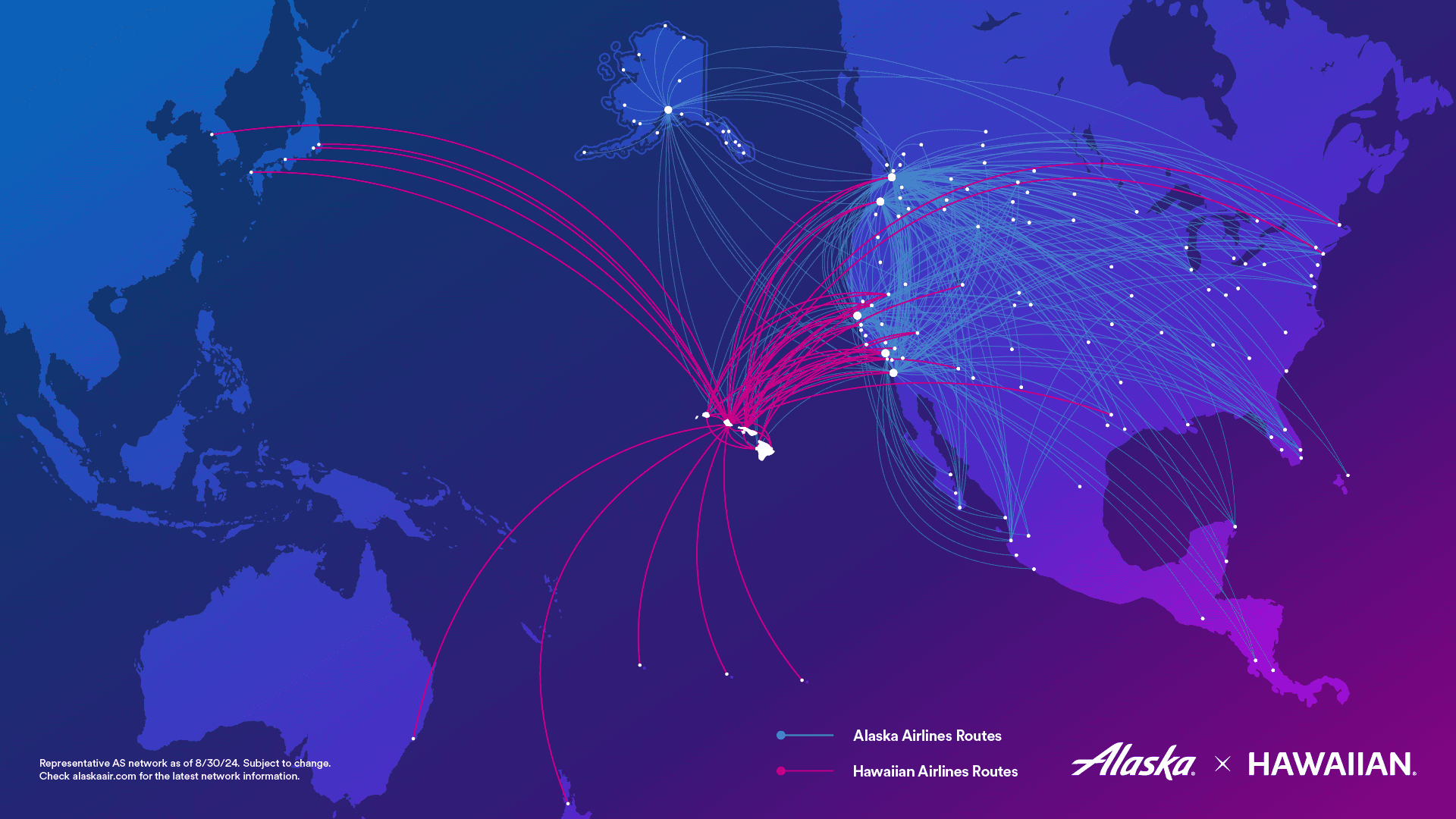
In late 2023, Alaska Airlines announced its acquisition of Hawaiian Airlines, introducing many new functionalities needed in CSA Mobile, along with a shift in business priorities – with airline integration as the top focus.
Hawaiian Airlines integration
Add necessary functionality to support Hawaiian agents, stations, and routes
OPPORTUNITY
How might we empower a single gate agent to efficiently manage any flight with a unified, scalable gate app?
Key design challenge
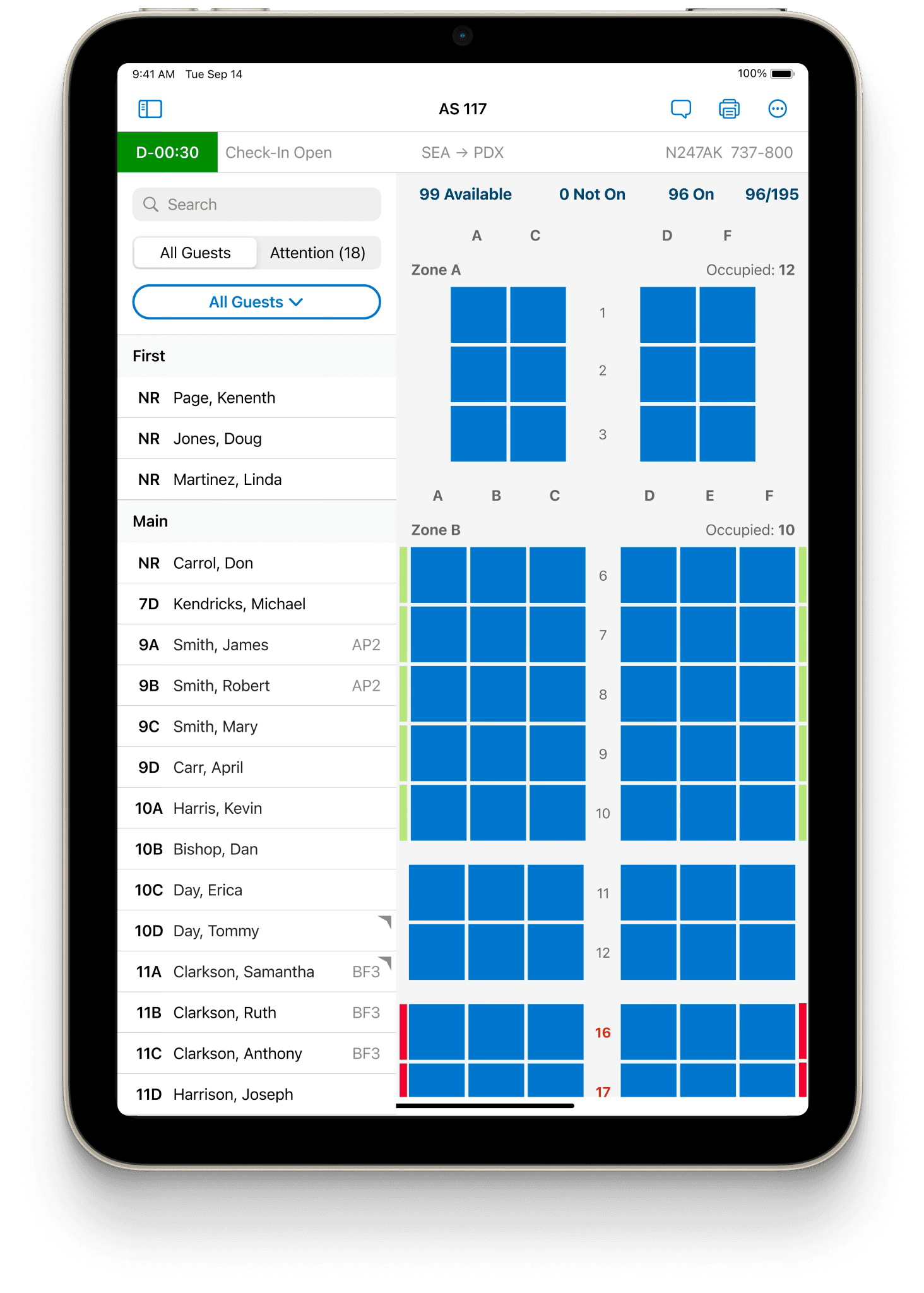
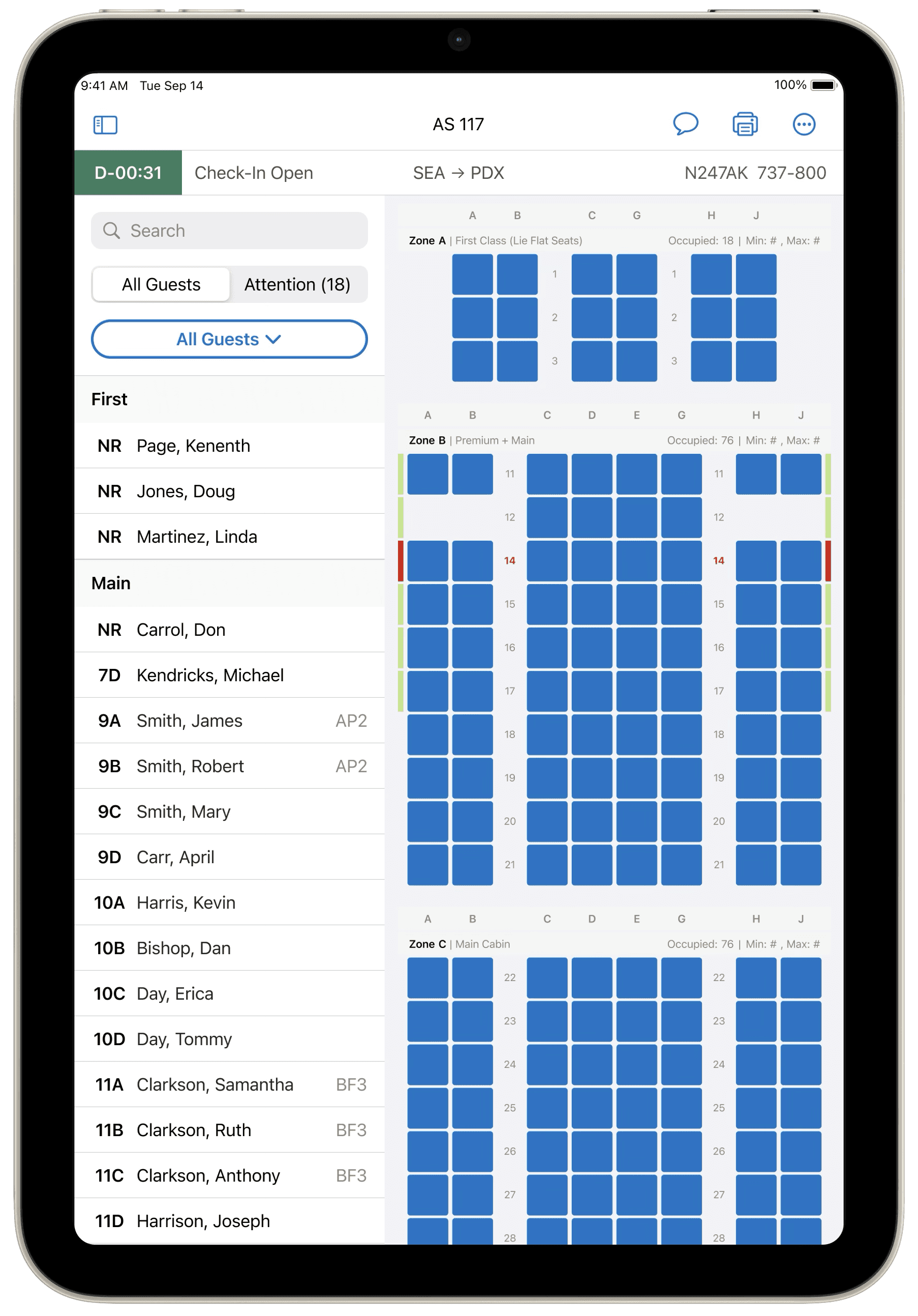
Hawaiian operates long-haul international flights on wide-body aircrafts, while Alaska operates a narrow-body fleet for short to medium-haul domestic routes. The existing app's design did not scale for the larger wide-body seat maps that come with a global expansion.

DESIGN EXPLORATIONS
2 columns
Smallest engineering lift
Inaccessible tap targets
Seats too small for icons & codes
Not enough list real estate for important guest info & actions
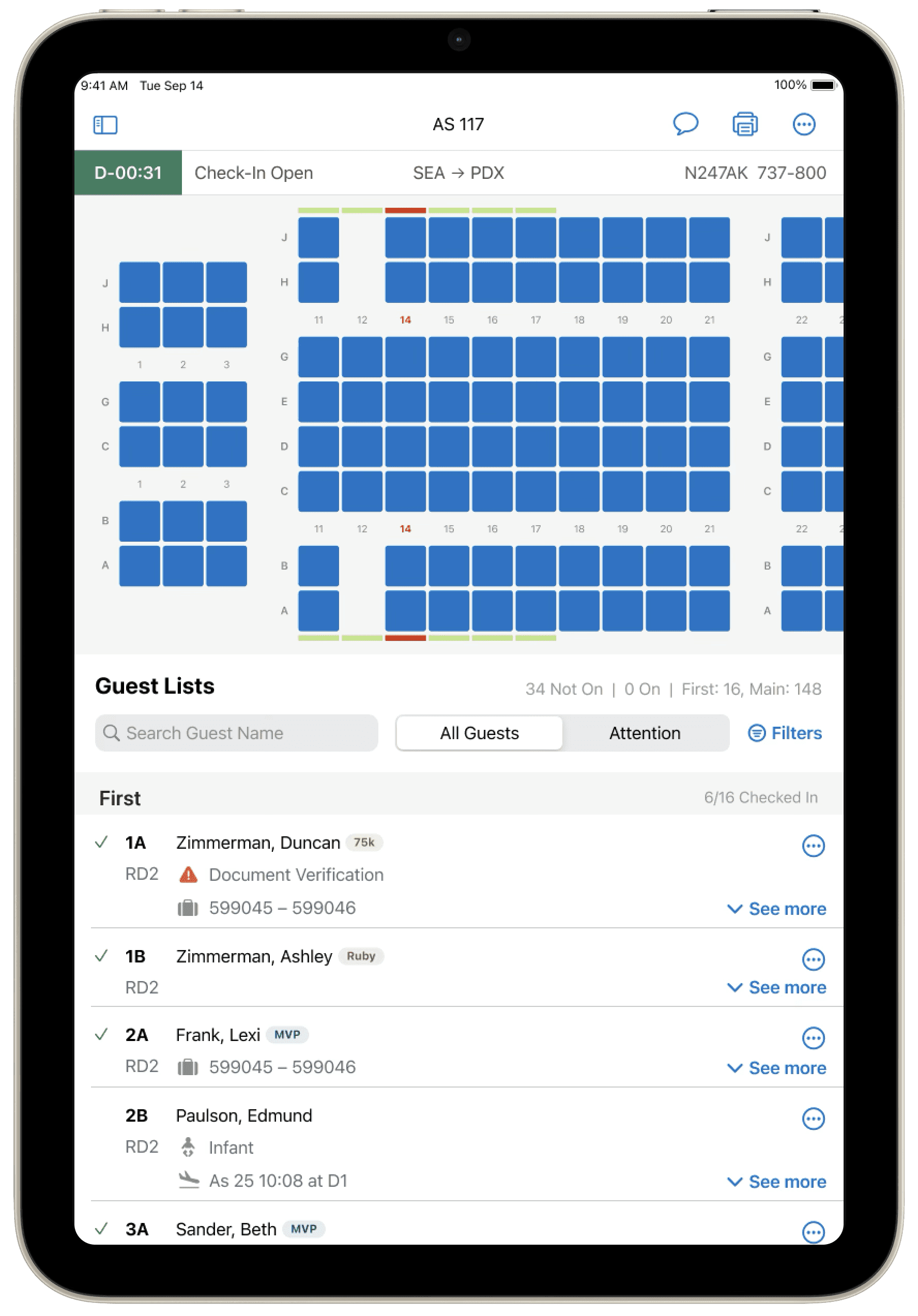
Horizontal scroll
More real estate for guest list info
Not scalable for even wider planes
Small tap targets
Horizontal seat map mental model is less familiar
Cannot expose much of the guest list
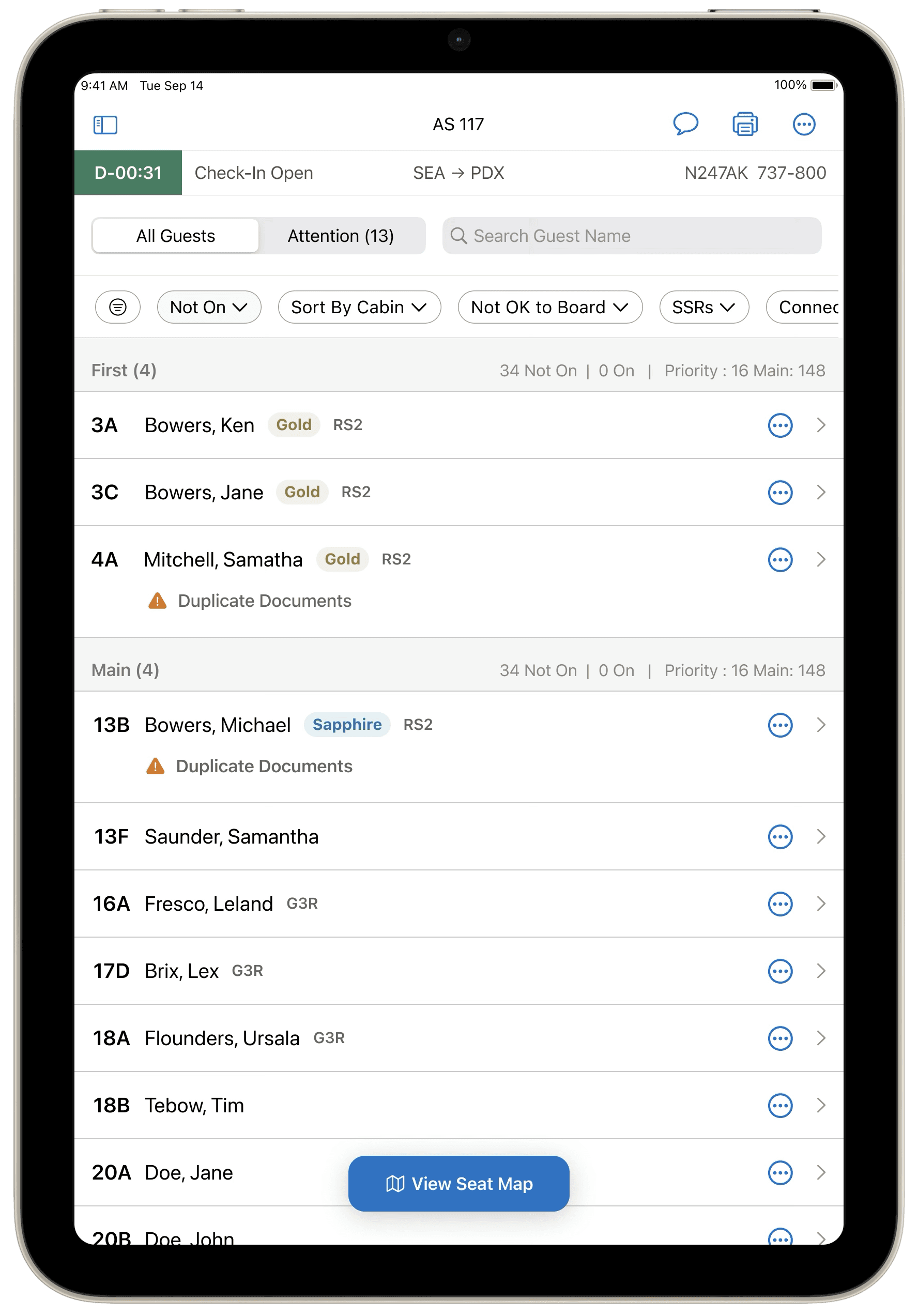
Floating button
Can see full seat map and full guest list in a focused way
Cannot view seat map and guest list simultaneously
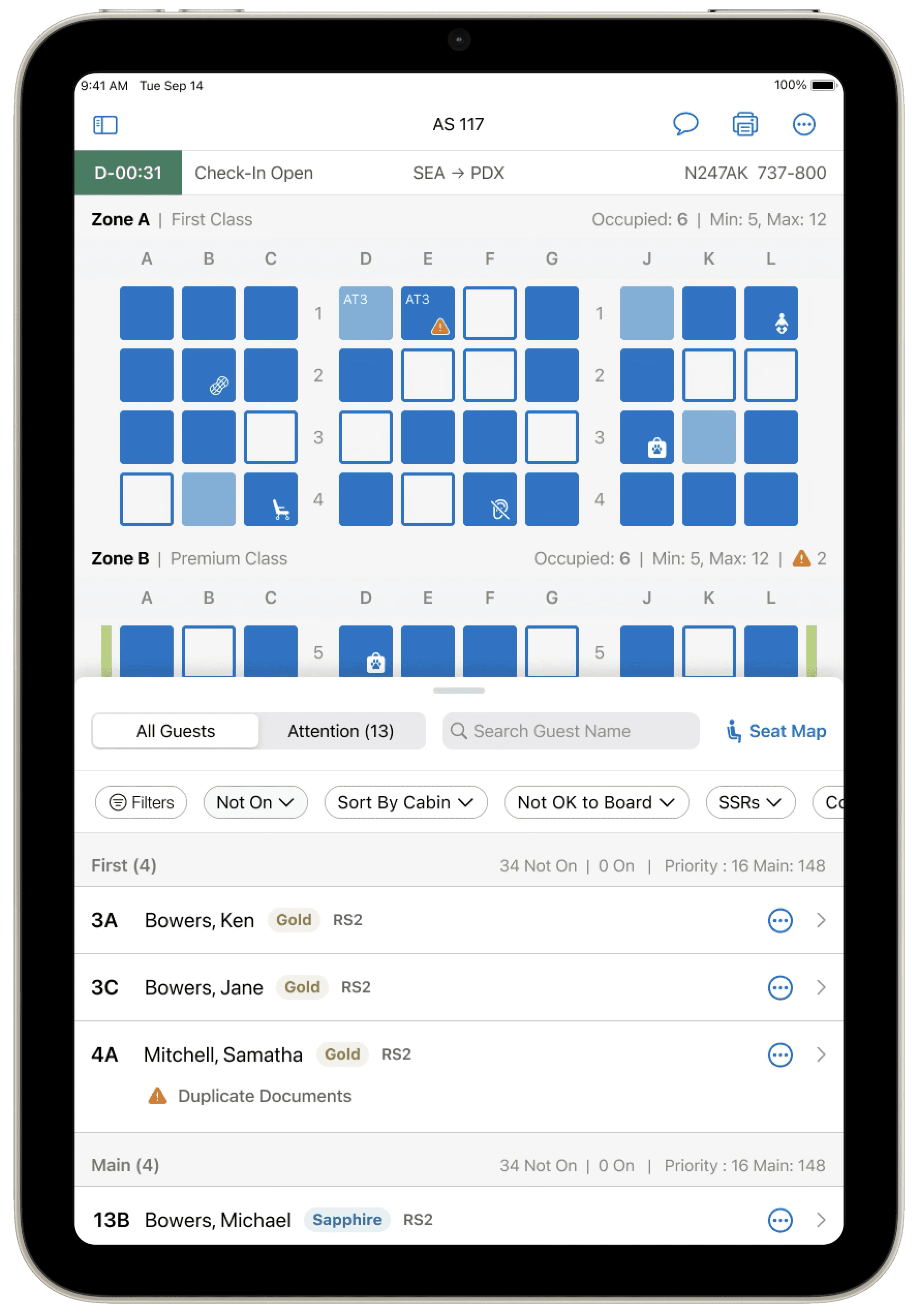
Tray
Can see both seat map and guest list simultaneously
Tray interaction is likely familiar from other apps used at home
New interaction with more may take some time to adapt for more senior agents
USER TESTING
We hosted a full day in-person workshop with 10 agents from 8 different stations, including our large hubs, international, and small regional stations.
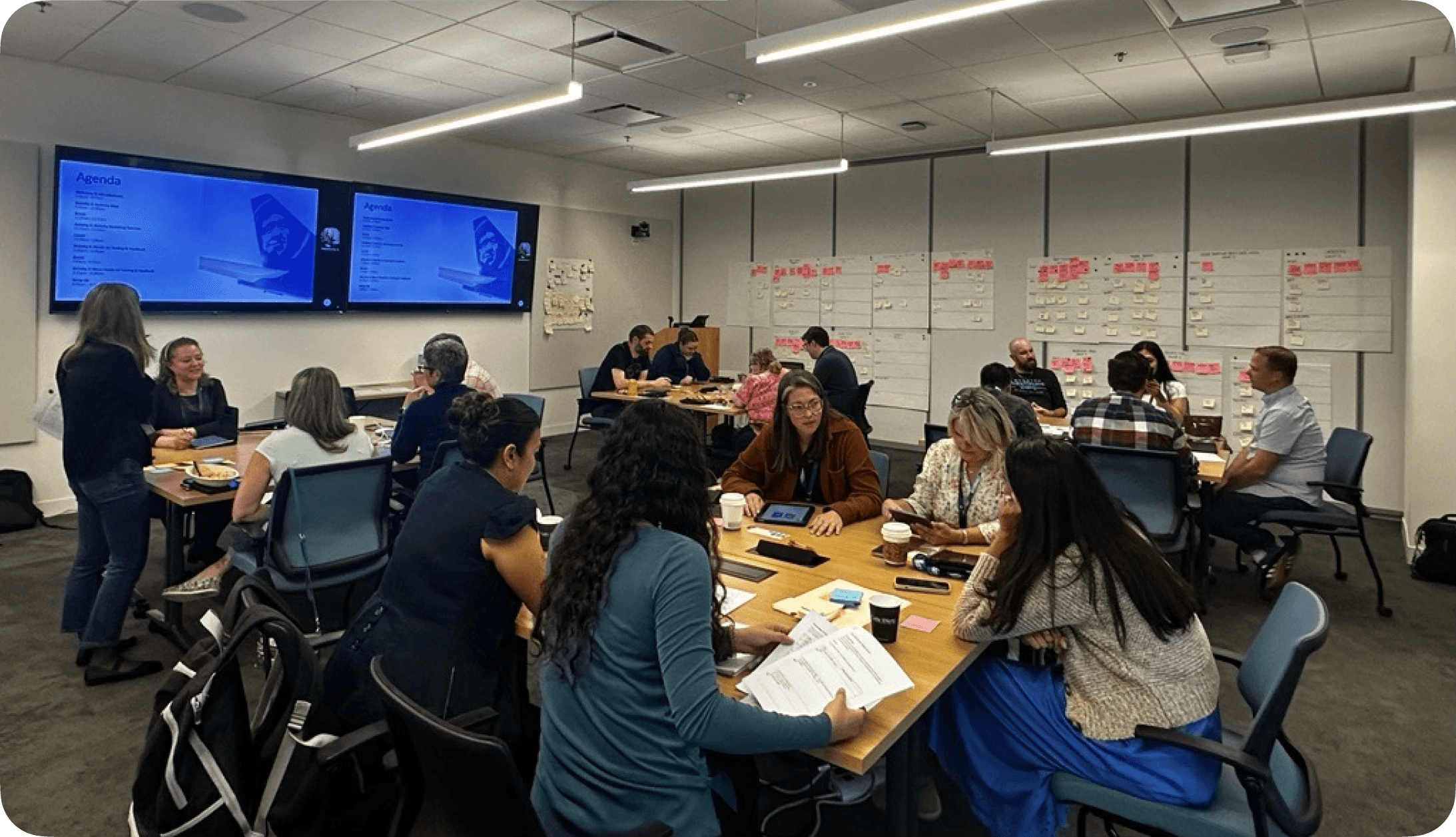
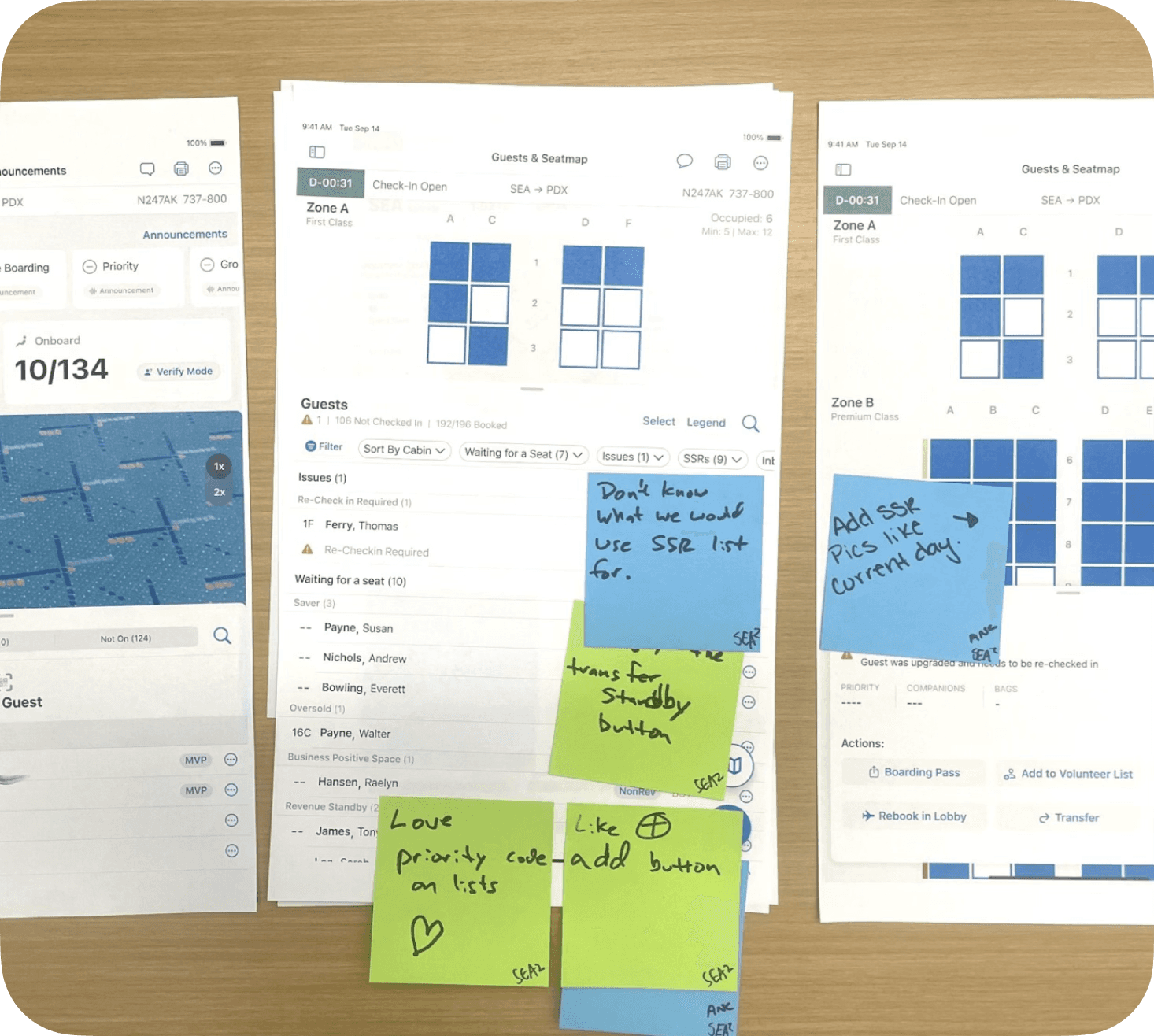
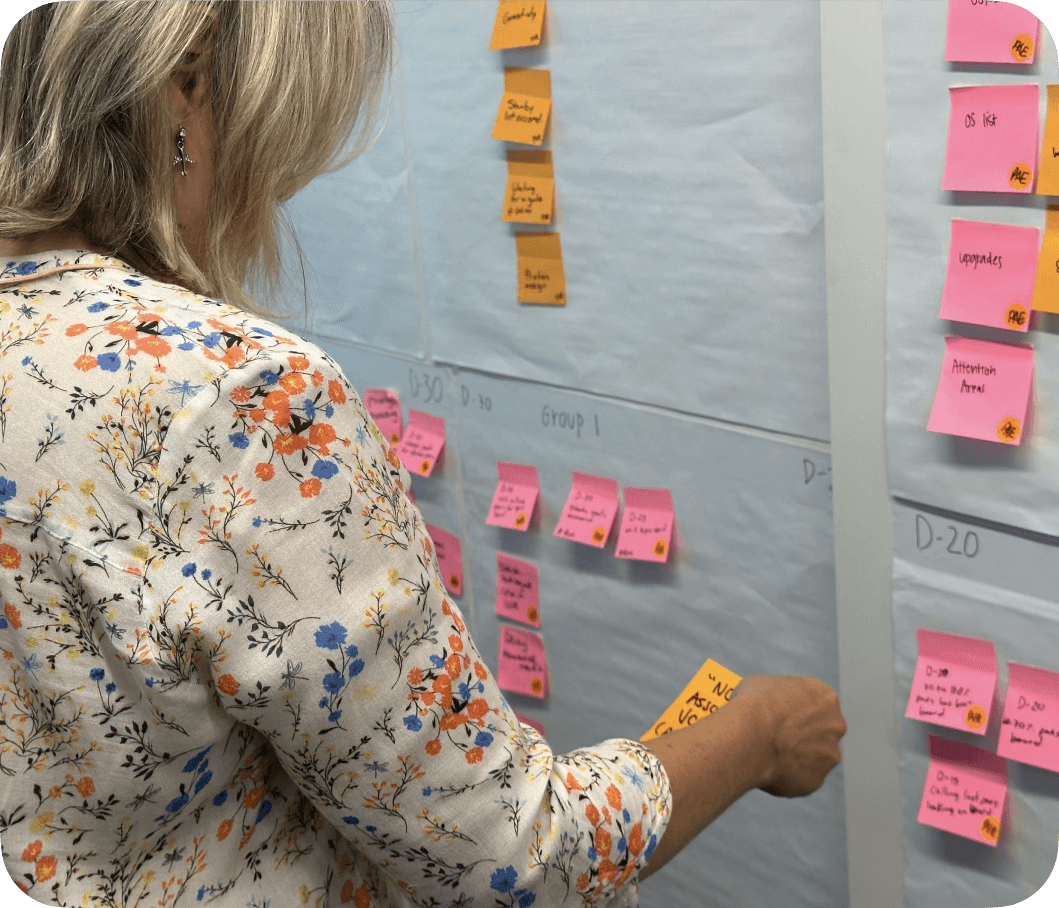
I iterated on the designs based on the feedback from this workshop, and arrived at the following final design solution for Alaska and Hawaiian Airlines' gate agent app.
FINAL DESIGNS

Flight Overview
All necessary data about the flight in one spot
Modular for flexibility and scale
Easy access to important actions & information, with the ability to dive deeper when needed
Seat Map & Guest Lists
Seamlessly switch between viewing the seat map and guest list
Bulk guest actions for efficiency
Centralized access to all essential lists
Highlights key guest information + easy access to companions with swipe interaction
Quick access to important special service information
Boarding & Announcements
Never leave this screen while boarding
Same-screen announcements
Quick access to actions in context, keeping the line moving forward
Close the flight directly in app, with auto-filled data in the flight report
IMPACT
REFLECTION
What I learned
Designing for scale, envisioning 5-10 years out
Test, refine, repeat! With a diverse variety of agents
Appealing to leadership to prioritize incremental experience improvements by aligning this vision with long-term business goals
What I would change
Gather more concrete data on current training time, time on task, and app switching
Seek more involvement from product & engineering partners early on
Future iterations
Managing multiple flights at once
Biometric boarding & automated announcements